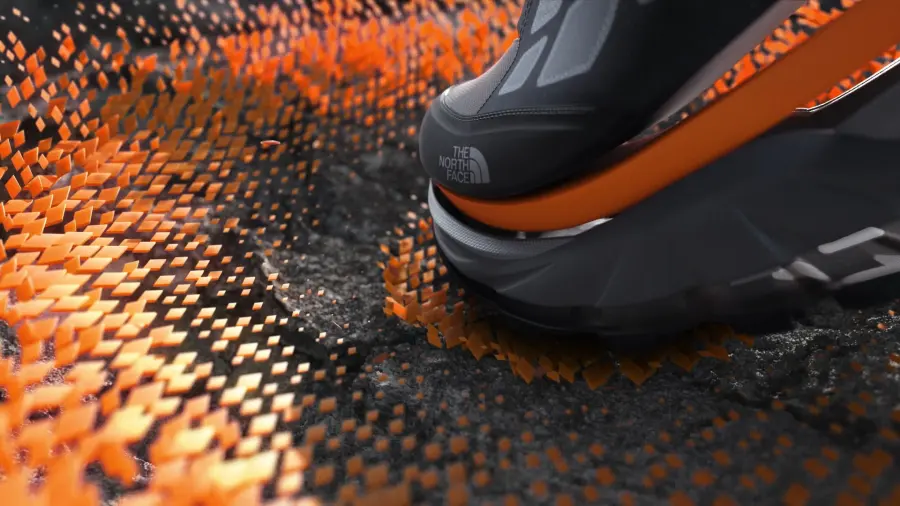
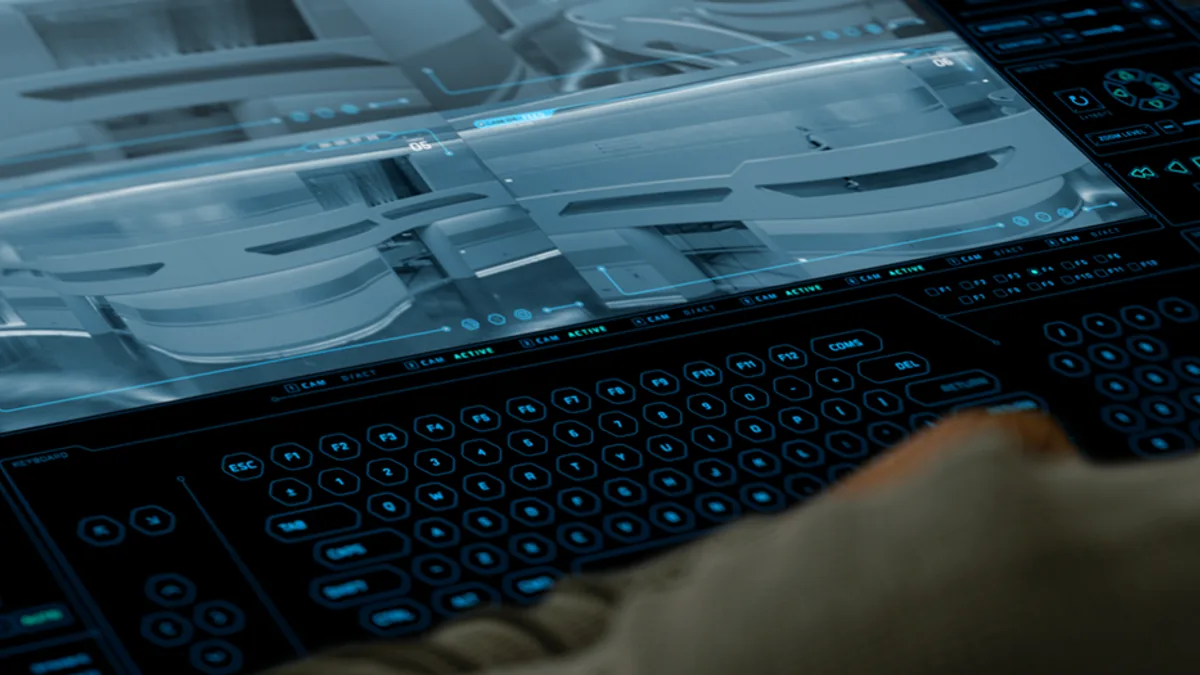
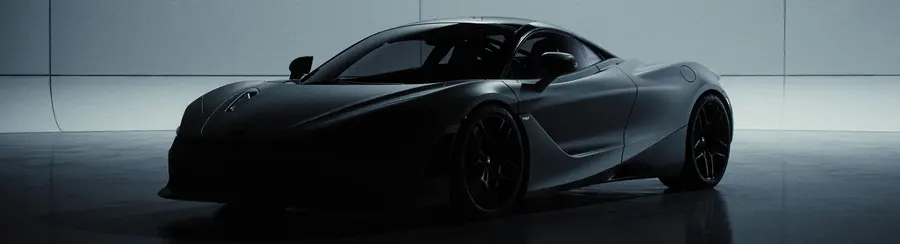
A portfolio reel is a craft argument, and Ortiz's makes his case through export discipline as much as design. The stills below work as a breakdown of that argument, frame by frame. The reel is built for the web, which changes the priorities behind every frame. It's not enough for a shot to look good in a render. It has to survive compression, load fast, and hold up on a small screen.
The tool stack shows how he threads that needle. Cinema 4D supplies dimensional depth where it counts, After Effects handles composition and timing, and Lottie exports the interface-scale pieces as lightweight vector animation. Running both a full 3D renderer and a vector export path in one body of work is a practical signal. Ortiz picks the right output for each context instead of forcing one workflow onto everything.
For a learner, the study here is less any single frame and more the judgment behind the reel. When does a shot deserve heavy 3D, and when should it Lottie out clean and tiny? Answering that per shot is what web-optimized motion actually means. Craft plus delivery, not craft alone.
Ortiz mixes cinematic 3D with Lottie-ready UI motion, and the range is the point. A reel that spans both tells a client he can take an idea from the hero shot down to the shippable microinteraction. That vertical fluency is rare and valuable. Most people specialize at one end and hand off at the seam, where the vision usually breaks. Watch how Ortiz keeps a consistent sensibility from a heavy render to a two-frame button state. Same taste, different budget. If you want to be the designer teams actually trust with motion, this is the skill to build, top to bottom, not just the pretty end.
Production notes
This frame comes from a web and interface study, where motion stays legible at small sizes and short durations. Jose Ortiz produced it in 2019, and the styleframe records the look decisions made before a single second of animation existed.
It was built using After Effects for compositing and animation timing, Cinema 4D for building the 3D scene, and Lottie for lightweight web playback. That toolset is what gives the motion design its specific weight, from how light falls to how the type settles into the frame.
Follow the attribution link above to see this work in its original context on Jose Ortiz's own portfolio.
Look at how the motion is engineered to stay readable inside a loop only a few seconds long.