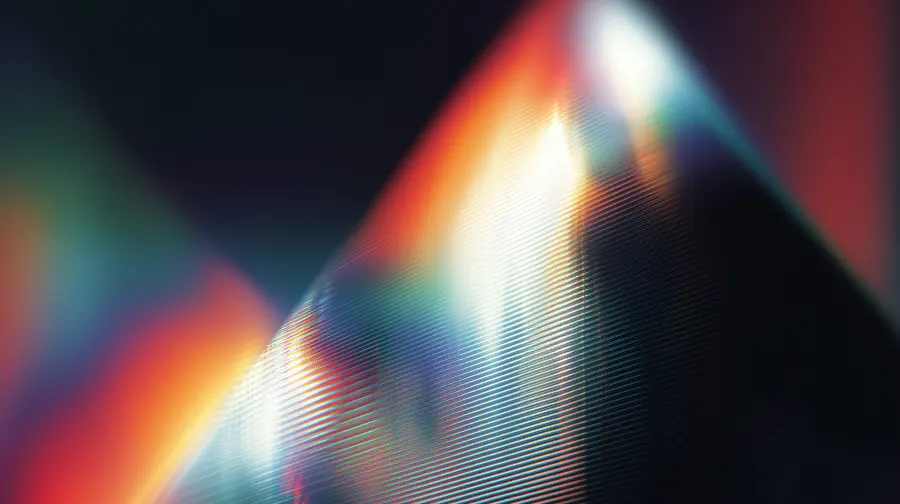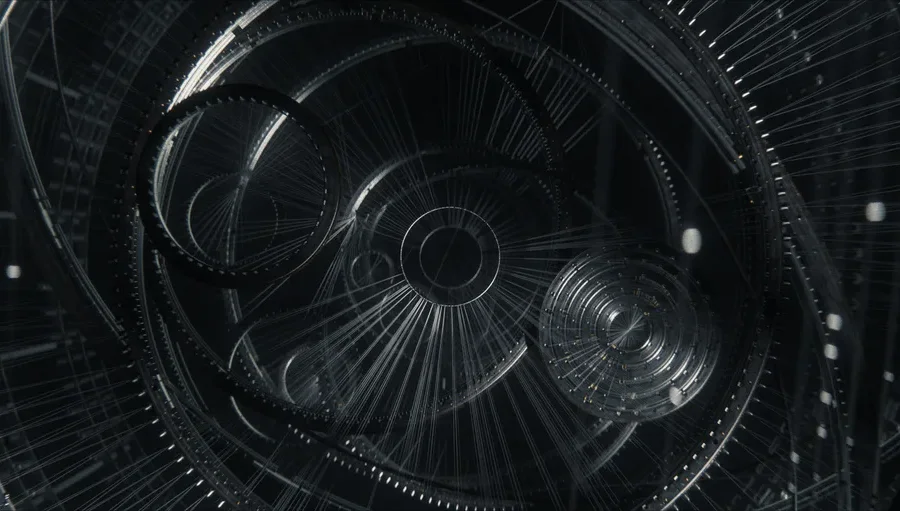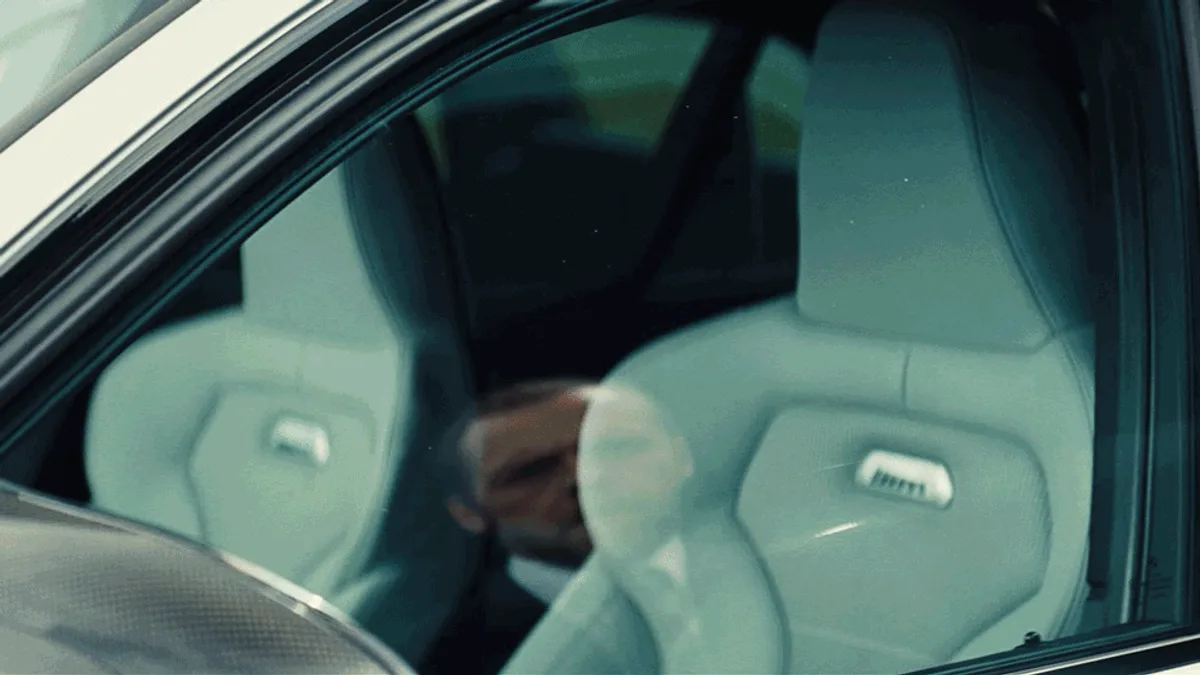
A 3D title sequence is where surface quality gets nowhere to hide, and Cem leans into that with procedural texturing. Instead of painting maps by hand, procedural setups let detail scale with the geometry, so a title form reads convincingly whether it fills the frame or sits deep in the shot. That's the quiet backbone of broadcast-grade work.
The renderer choices are worth noting. Running both Octane and Redshift, plus Houdini for procedural and effects layers, is a deliberate spread. Each engine has a look under specific lighting, and Cem picks per shot rather than forcing one to imitate the other. Cinema 4D ties the staging together and After Effects would carry the final grade.
Atmospheric perspective does the depth work here. Contrast eases off into the distance, and the title stays anchored in the sharp, high-contrast foreground. For anyone learning title design, the study is that texture and depth are hierarchy tools, not finishing touches. Get the surface and the value falloff right, and the type reads before a single word registers.
Three renderers on one title sequence, Octane, Redshift, and Houdini, and the interesting thing is you cannot tell where one ends and the next begins. Cem hides the toolchain behind a single consistent look. That is the mark of a mature workflow: the tools serve the vision instead of leaving fingerprints. Product teams should envy this. When a screen betrays which framework built it, the abstraction has leaked. The user should feel one coherent thing, not a seam between a native view and a web component. Cem's frames are a masterclass in making disparate parts read as one surface.
Production notes
This frame comes from a brand-motion piece, where the styleframe locks the color language and spatial logic of the spot. Ethem Cem produced it in 2019, and the styleframe records the look decisions made before a single second of animation existed.
It was built using Cinema 4D for building the 3D scene, Octane for GPU rendering and light response, Redshift for GPU rendering and material passes, and Houdini for procedural simulation and effects. That toolset is what gives the motion design its specific weight, from how light falls to how the type settles into the frame.
Follow the attribution link above to see this work in its original context on Ethem Cem's own portfolio.
Look at how a single restrained palette does more work here than any amount of added detail would.