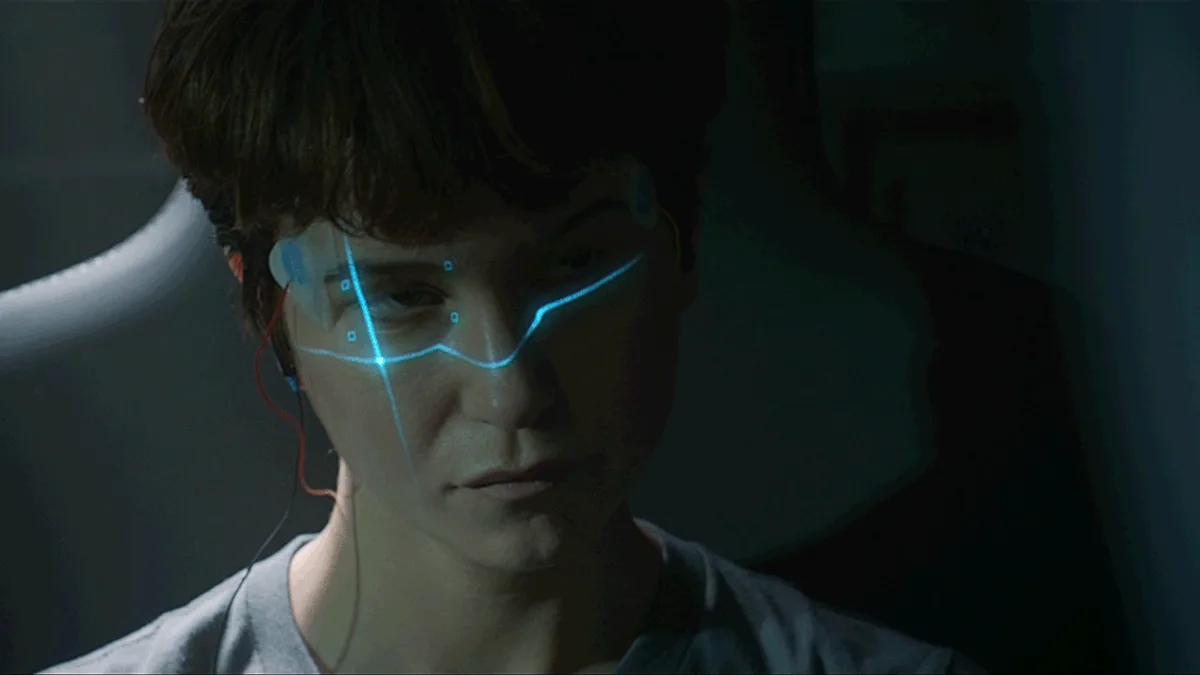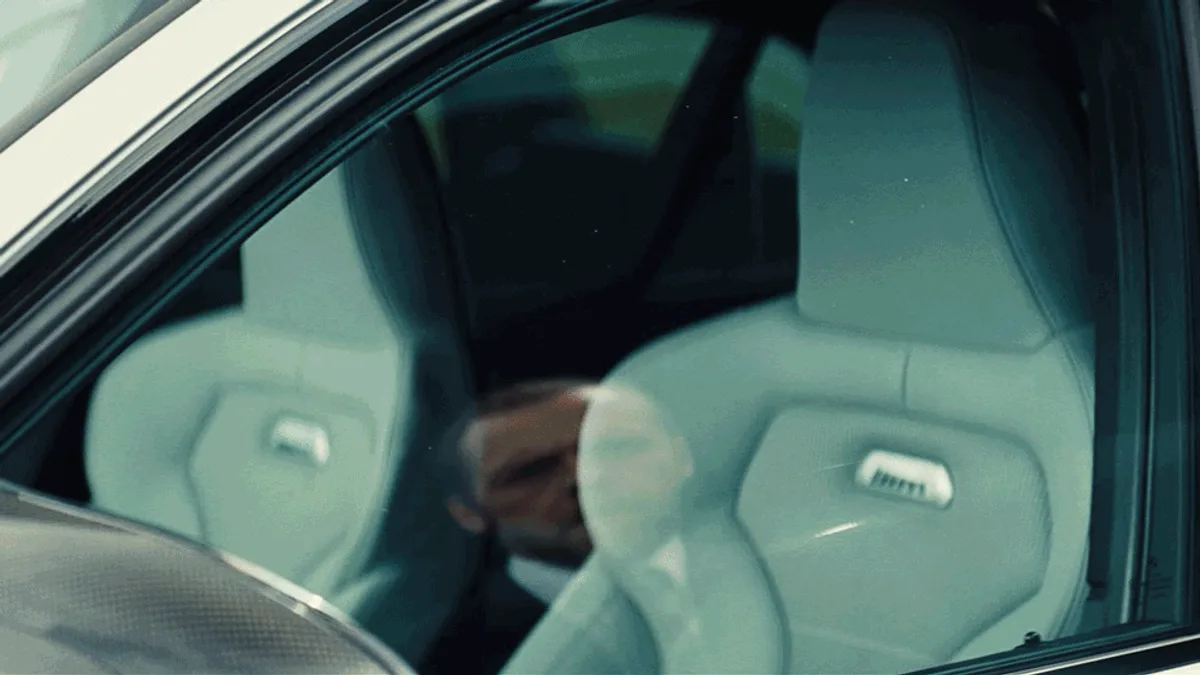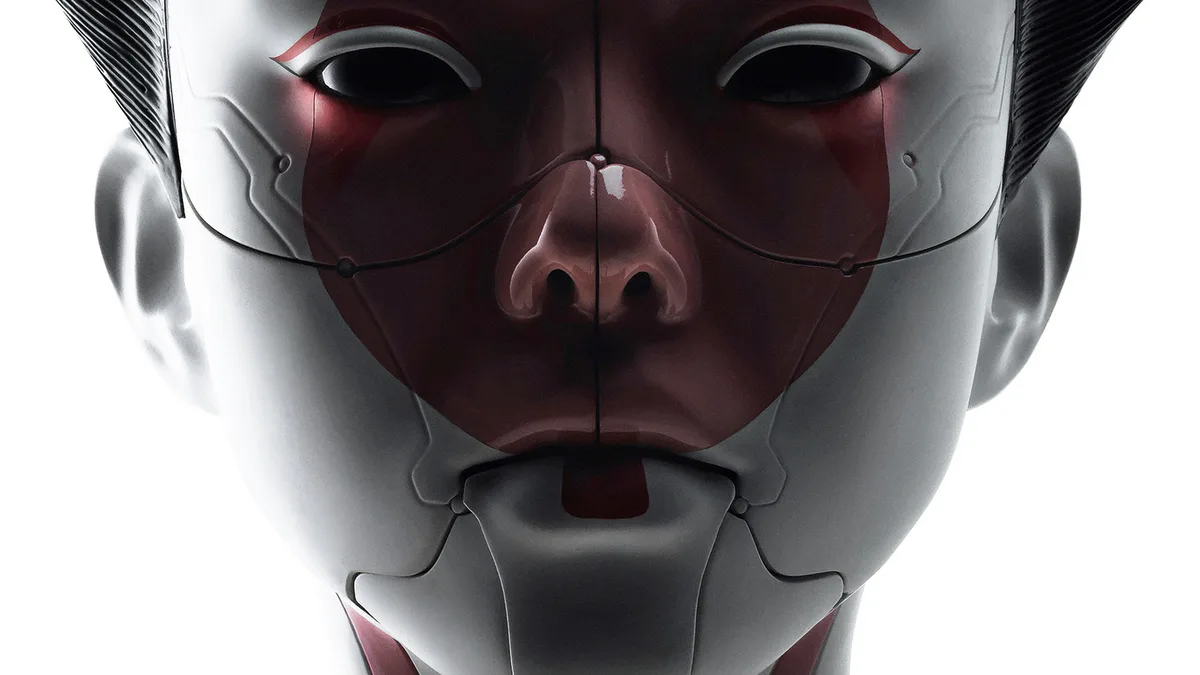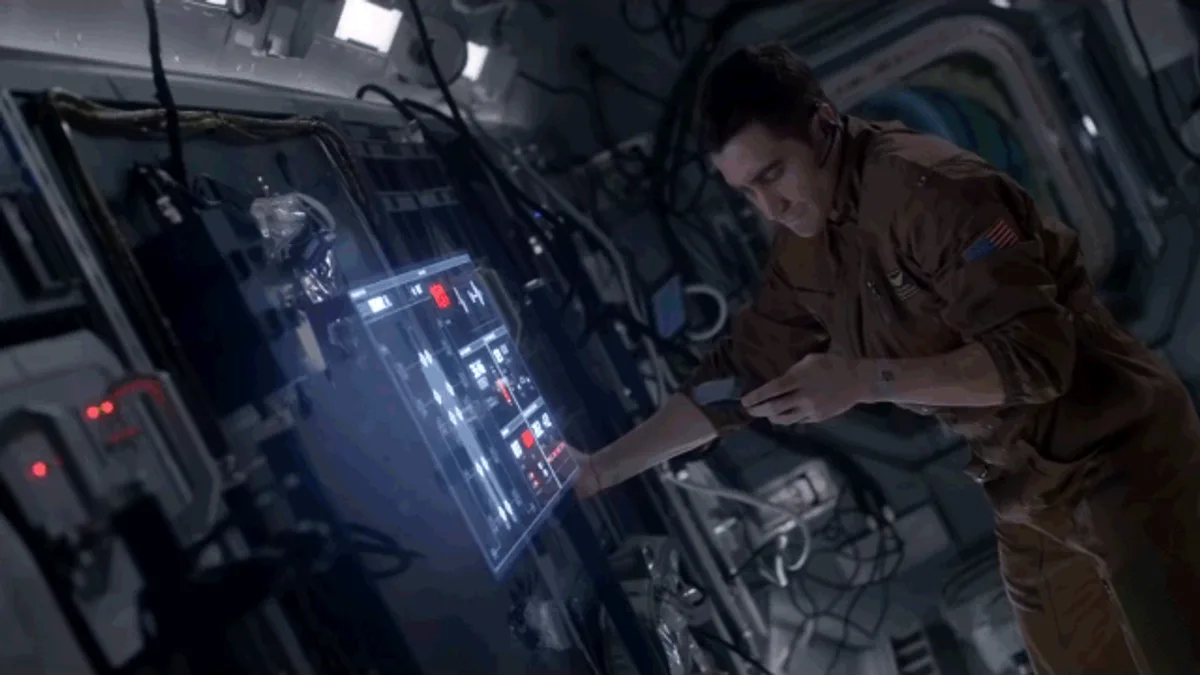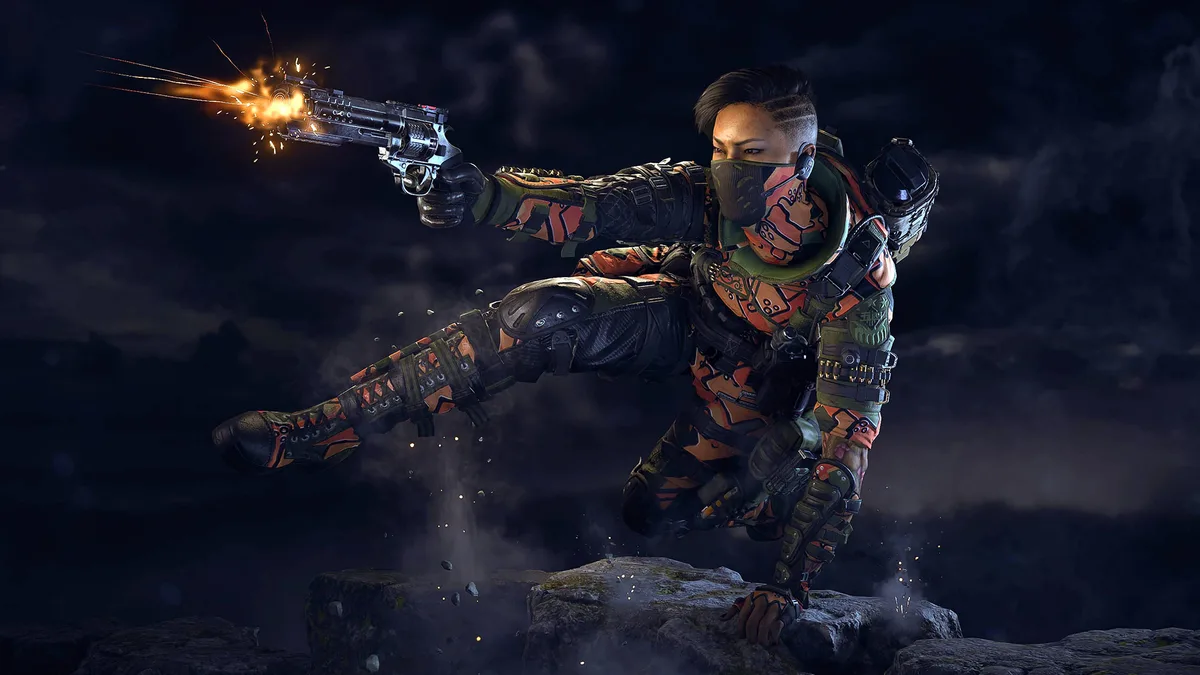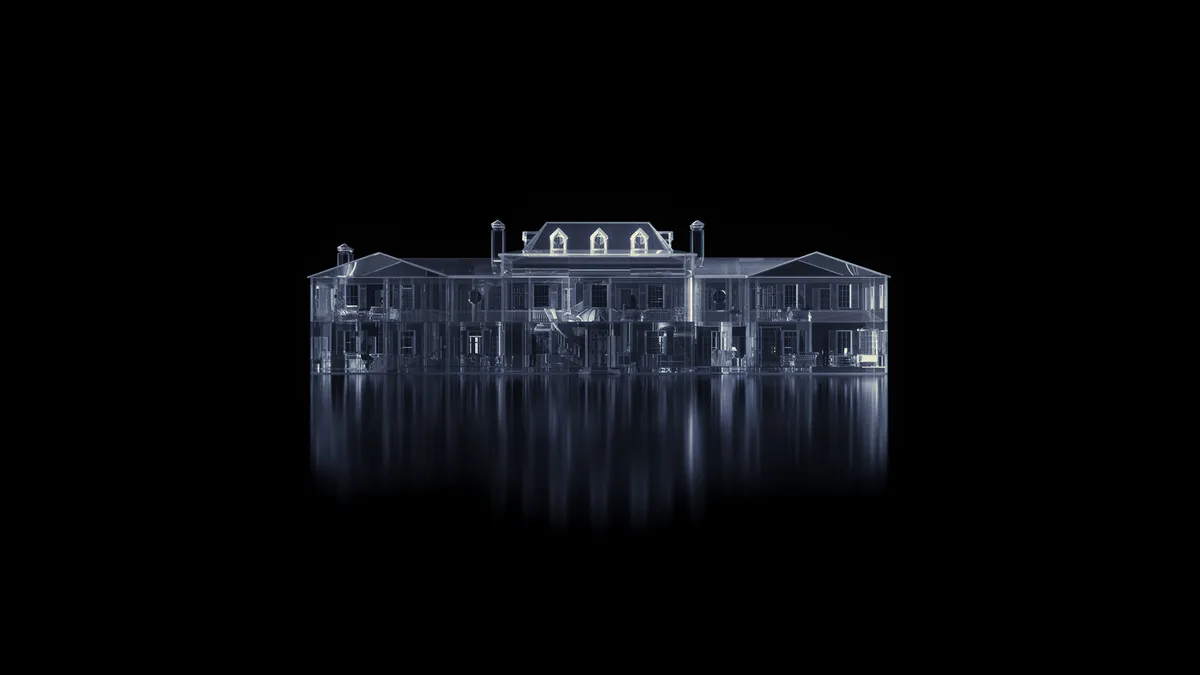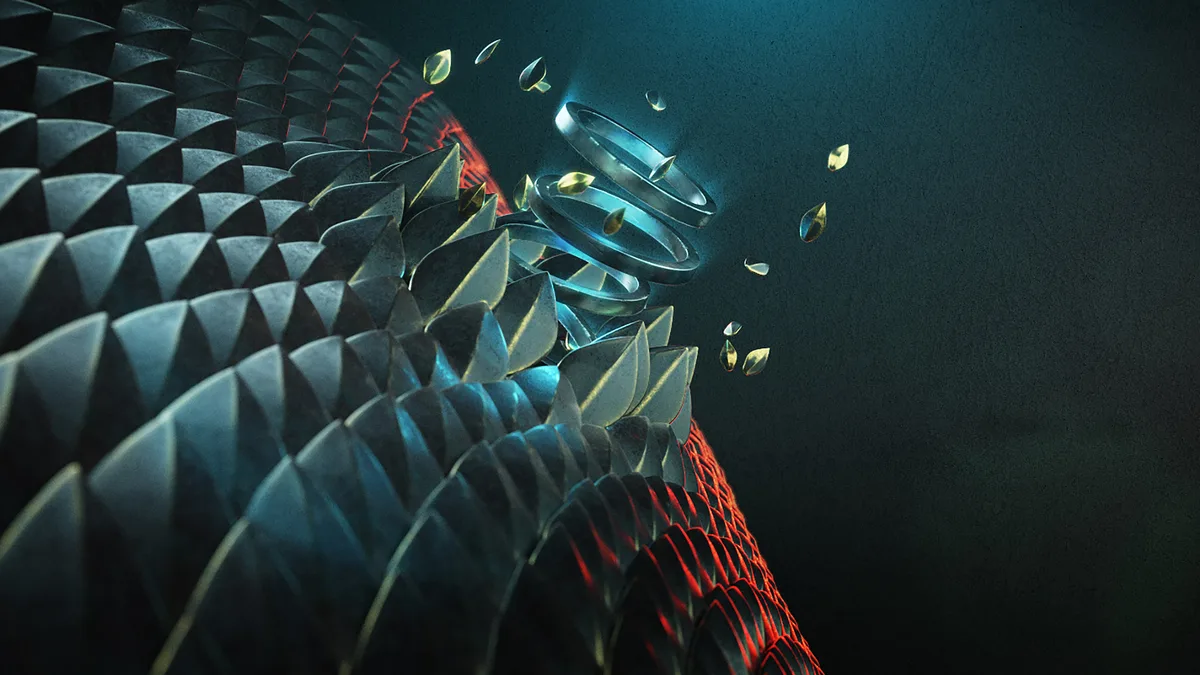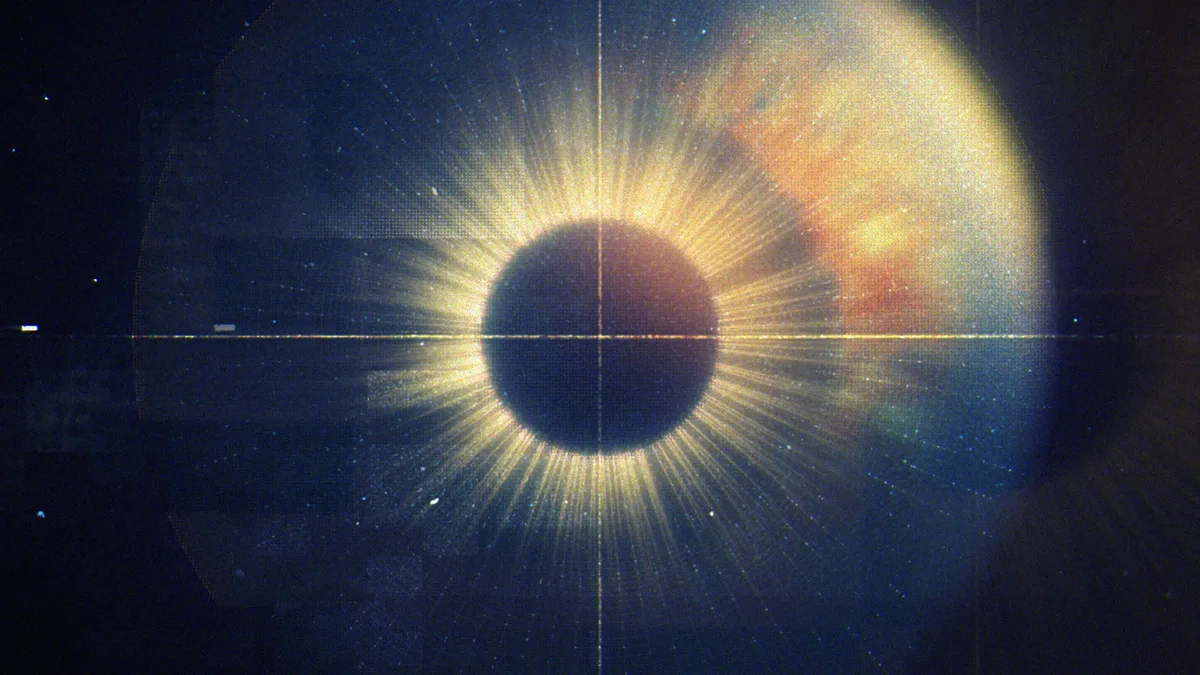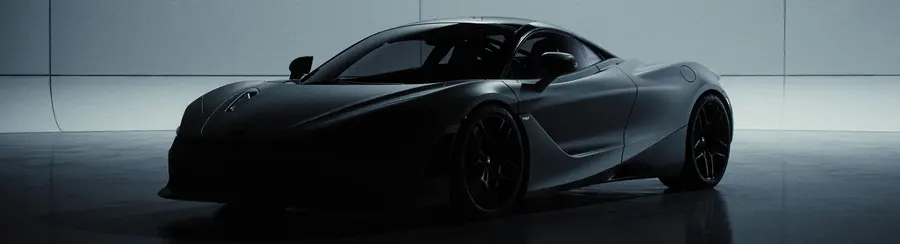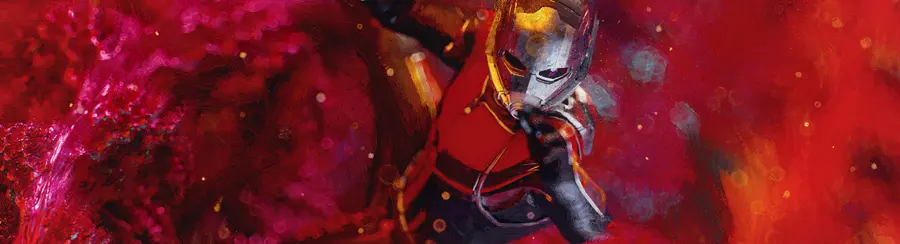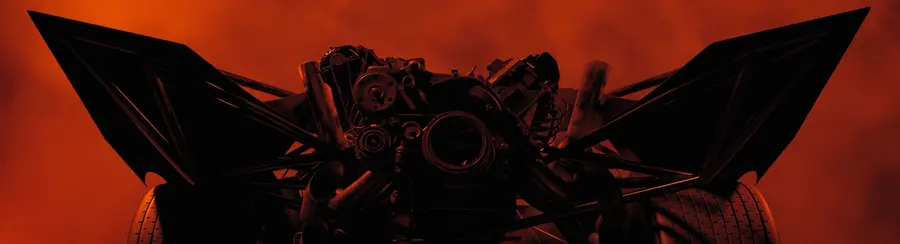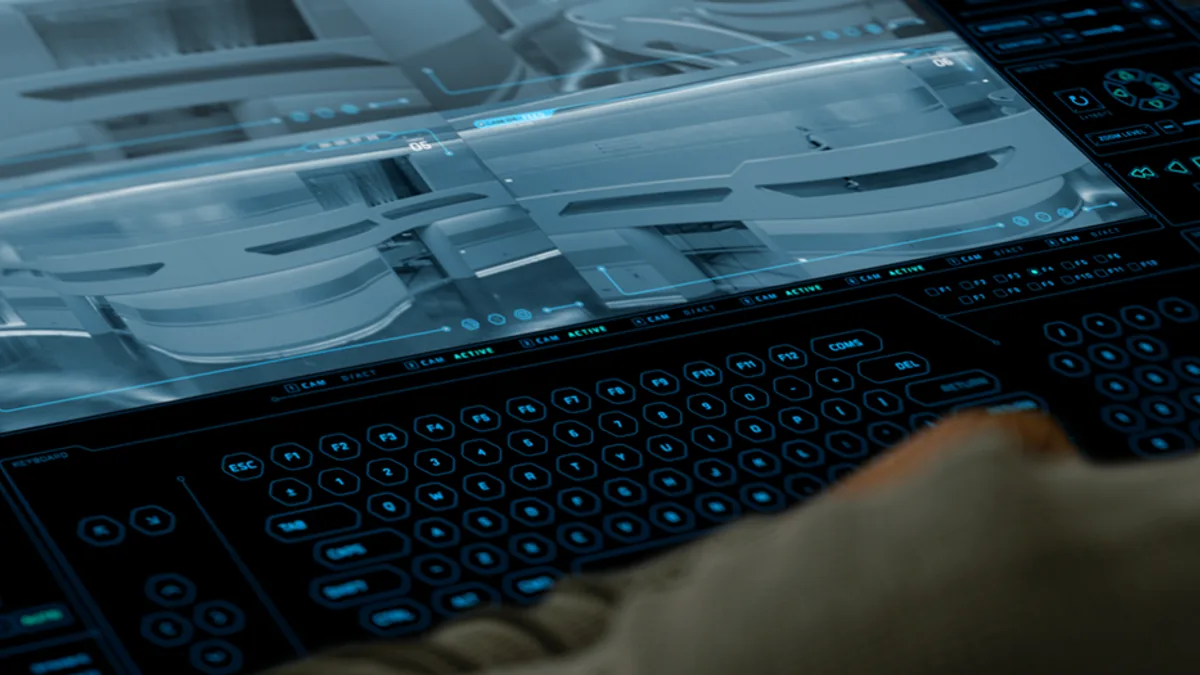
Film graphics are not title design, and Passengers is a clean place to see the difference. Braga worked on this Sony production in late 2016 as part of the design team at MPC Design London, on concept, design, and animation for what his portfolio calls "hero storytelling screens to background screens." No credits roll here. These graphics live inside the movie's world, on the Avalon's displays, and they have to survive being read by characters, not just audiences.
That distinction changes the brief. A hero storytelling screen carries plot: a character looks at it, and the audience has to grasp the same information at the same moment. A background screen only has to feel plausible in the corner of the frame. Same project, two completely different tolerance levels for detail, and a styleframe for each has to know which job it is doing before a single element gets placed.
The production context is worth knowing too, because it shows in the discipline of the frames. By Braga's own account this was a quick-turnaround job during the film's post-production, with many assets to deliver in a short window. Screen graphics teams rarely get the schedule title designers do. The style has to be systematized early, one visual language that eight designers can execute in parallel, which is exactly what the credit list shows: a creative director, Ryan Jefferson Hays, holding the language together while a team of eight built the volume.
For interface designers the lesson runs backwards from the usual one. Real products chase clarity within brand constraints; film UI chases believability within story constraints. But the craft transfers: a screen that reads at a glance from three meters away, a hierarchy that survives being out of focus, a system consistent enough that no single frame betrays the illusion. If your dashboard would hold up as a background screen on the Avalon, its hierarchy is probably right.
Production notes
This frame comes from a motion design project. Andrea Braga produced it in 2016, and the styleframe records the look decisions made before a single second of animation existed.
Andrea appears 2 times across the Art of Styleframe library, so the related frames below trace the through-line in this designer's craft rather than showing one isolated piece.
Read the frame for its restraint as much as its detail: what stays still, what gets emphasized, and how the eye is led from one beat to the next.