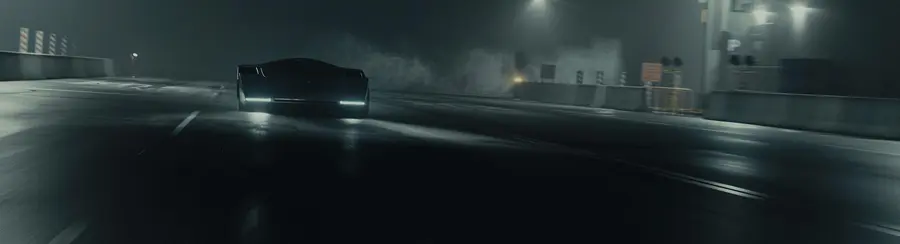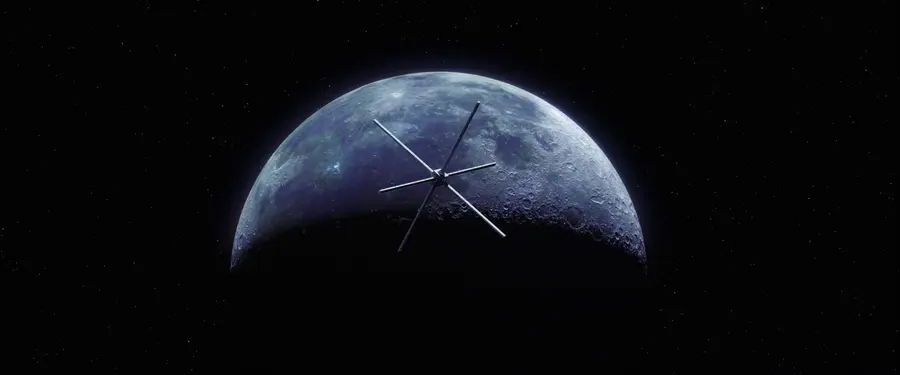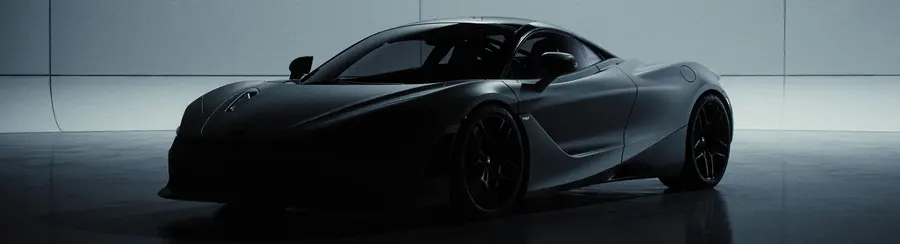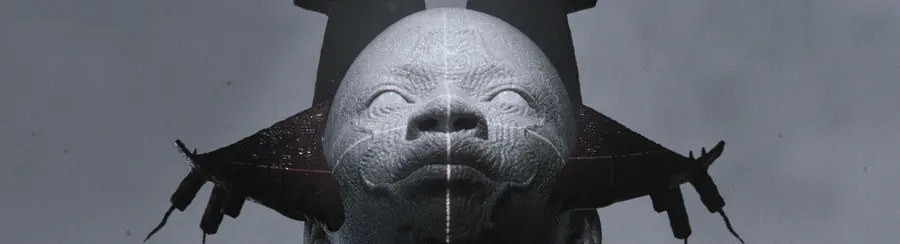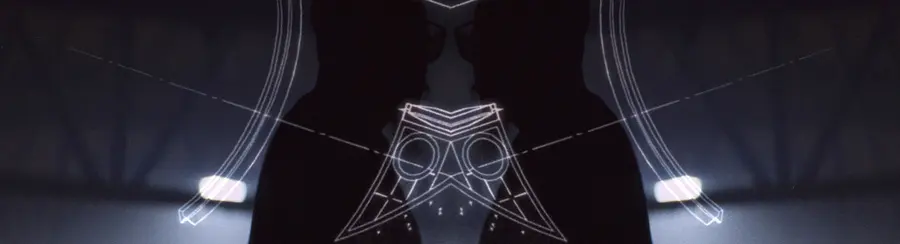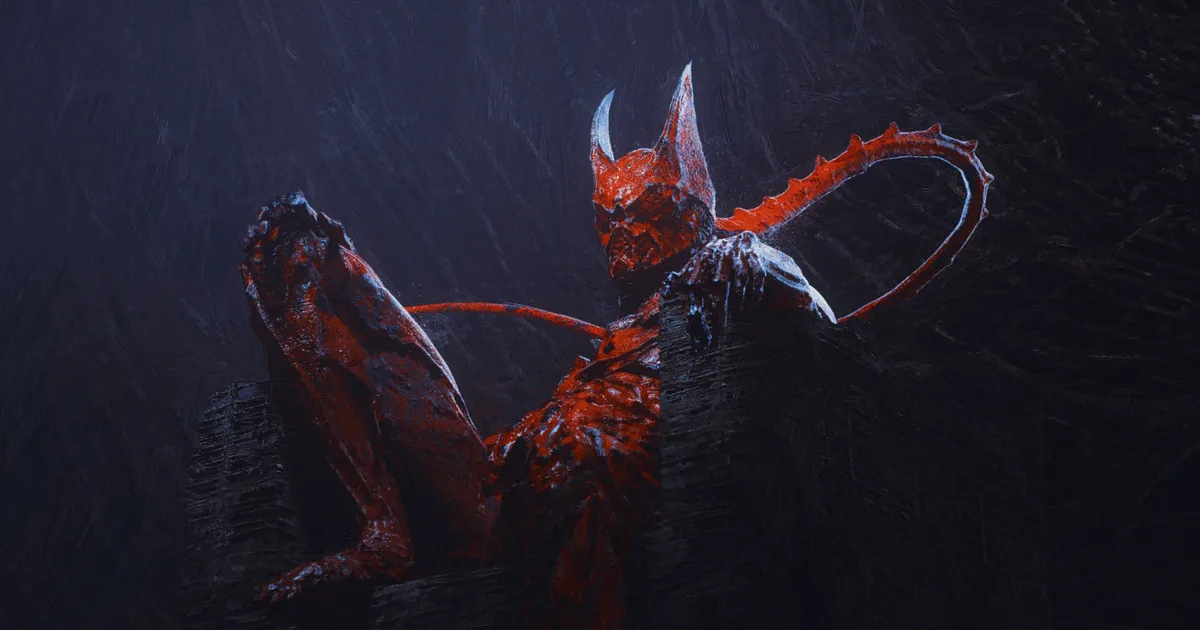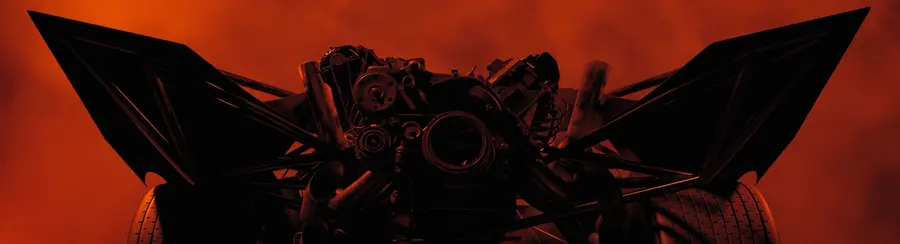
Thorp's Batmobile concept for The Batman, the Matt Reeves film, shows breathing-room hierarchy, and that rest beat between two pieces of motion is what makes the next reveal land. It's a counterintuitive idea. The most important frame in a sequence is often the quiet one right before the payoff, because contrast needs a low point to push against.
You can read that intent in a still. The Photoshop, Cinema 4D, and After Effects stack gives Thorp control over darkness, and this material lives in shadow. Empty, low-detail regions aren't wasted space. They're the pause. When most of the frame stays held and calm, the single lit accent hits harder when motion finally arrives.
For anyone cutting promotional or title work, the lesson is pacing, not density. Don't fill every second. Give the eye somewhere to rest so the reveal has somewhere to come from. Watch how much of this concept commits to restraint and how little it needs to feel heavy. The mood does more work than any effect. Silence, then impact. That's the whole trick.
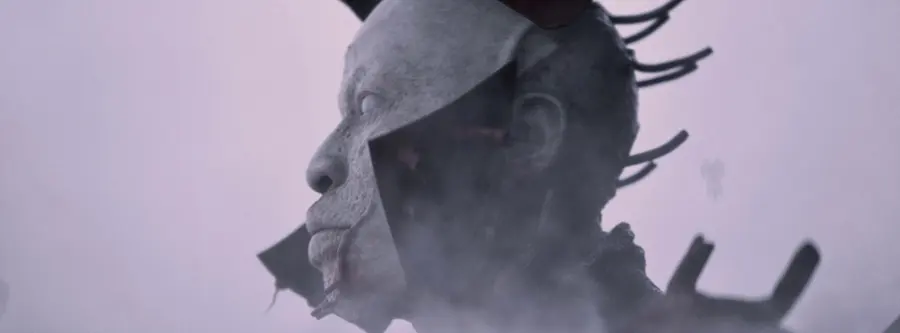
Thorp's take on the cowl trades spectacle for mood, most of the frame in shadow with just enough light to read the form. The confidence to under-light is the lesson. It maps directly to dark interfaces, where the temptation is to brighten everything until the drama drains out. Thorp keeps the darks dark and lets a single edge of light do the work. That is how a dark mode earns its atmosphere instead of just inverting a light one. Study exactly how little illumination he needs to sell the shape. Then go remove half the glow from your dark theme and watch it improve.
Production notes
This frame comes from a commercial project, where a single frame has to sell the tone of the finished film. Ash Thorp produced it in 2022, and the styleframe records the look decisions made before a single second of animation existed.
It was built using Photoshop for matte painting and texture work, Cinema 4D for building the 3D scene, and After Effects for compositing and animation timing. That toolset is what gives the motion design its specific weight, from how light falls to how the type settles into the frame.
Ash appears 8 times across the Art of Styleframe library, so the related frames below trace the through-line in this designer's craft rather than showing one isolated piece.
Look at how one frame compresses the whole tone of the spot into a still you can read in a second.