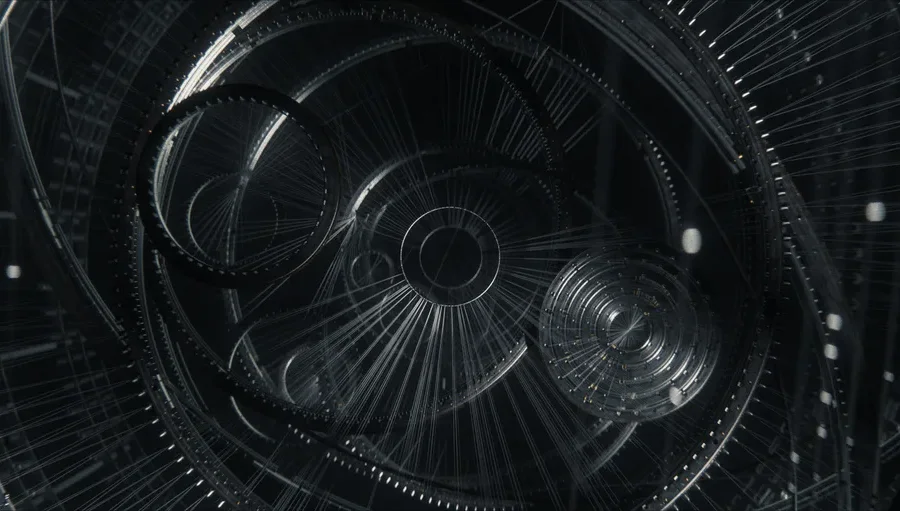
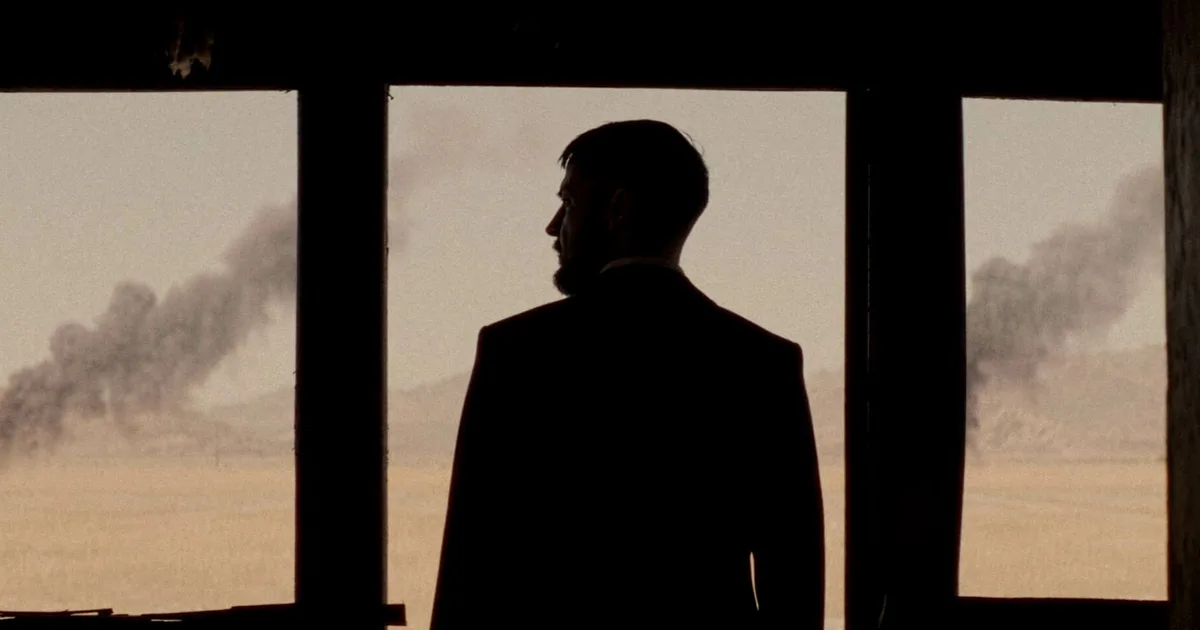
The X-Men: Apocalypse main titles carry an absurd narrative load for a sequence of their length: they have to span from ancient Egypt to the 1980s, because the film's villain does. Prologue Films built that traversal, with Nadia Tzuo credited by Art of the Title as main title designer, and as art director and lead designer on the end titles.
What makes the frames worth studying is how they solve time travel graphically. Rather than depicting eras, the sequence moves through strata, layers of civilization stacked and cut through like a core sample. Each frame reads as a cross-section, which lets thousands of years compress into seconds without a single costume change. That is a styleframe idea first and an animation idea second; the concept survives in any individual still.
On her own Behance case study for the project, Tzuo lists her role as art direction and design, produced at Prologue Films, and credits Ilya V. Abulkhanov as creative director; that page also names Photoshop and Cinema 4D as the working tools. Those specifics come from the one first-party source, so they are attributed to it rather than stated as independent fact, which is how credits in this library now work.
The image above is illustrative. The actual boards and frames are on Tzuo's portfolio at the source link, and the finished sequence is on Prologue's site.
Production notes
This frame comes from a title sequence, where pacing and typographic rhythm carry the opening before any dialogue lands. Nadia Tzuo produced it in 2016, and the styleframe records the look decisions made before a single second of animation existed.
Follow the attribution link above to see this work in its original context on Nadia Tzuo's own portfolio.
Look at how negative space and type pacing set an expectation the rest of the sequence pays off.