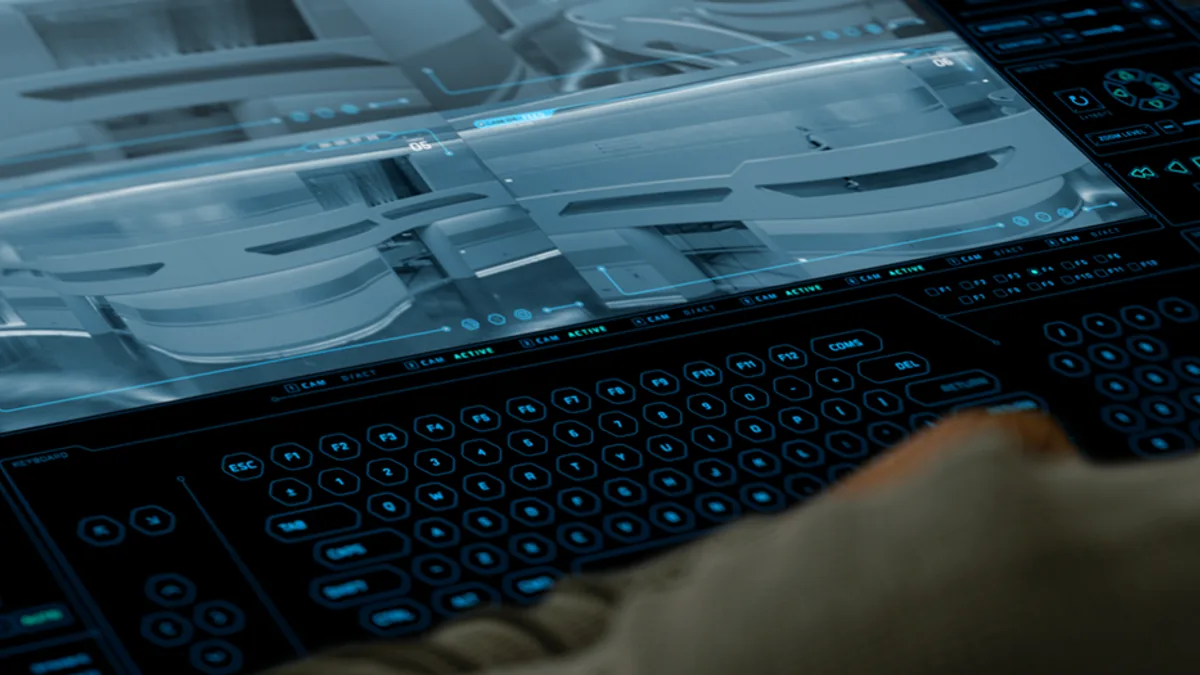
Iron Man 2's screens are a foundational text of FUI, fictional user interface, and Prologue Films made a large share of them: Tony Stark's desktop environment, diagnostics readouts, terminal windows, the holographic workbench surfaces. Motionographer's contemporaneous credit list names sequence designers Ilya Abulhanov, Paul Mitchell and Danny Yount, with Kyle Cooper as executive producer and design by Clarisa Valdez and Chris Sanchez.
The design problem is unlike any product interface: these screens are performed. An actor gestures at them, the camera swings past them, and the audience must register their meaning in half a second of screen time without ever operating them. That forces a hierarchy discipline product design should envy. Every panel needs one readable headline element, because that is all the shot will give it.
Study the frames on Abulkhanov's portfolio, the source link, for how density is faked. The screens feel information-rich, but the richness is compositional: layers of dimmed secondary material framing one bright, moving focal element. Real dashboards drown users by giving everything equal weight; these graphics survive because they never do.
One honest boundary on the credit: Prologue was a major vendor on the film's graphics, and these credits cover Prologue's share. Other studios contributed interface work elsewhere in the film, so this entry claims only what the published list supports. The image above is illustrative.
Production notes
This frame comes from a motion design project. Ilya Abulkhanov produced it in 2010, and the styleframe records the look decisions made before a single second of animation existed.
Ilya appears 3 times across the Art of Styleframe library, so the related frames below trace the through-line in this designer's craft rather than showing one isolated piece.
Read the frame for its restraint as much as its detail: what stays still, what gets emphasized, and how the eye is led from one beat to the next.