A styleframe and a mood board both live at the front of a project, both deal in look and feel, and both get shown to clients, so it's no surprise people use the words interchangeably. They shouldn't. A mood board gathers references to point at a direction. A styleframe is an original, finished-quality frame of your actual project that proves the direction works. Whole teams argue for an hour because half of them mean "inspiration pile" and half meant "the real thing." If you would rather start from something already structured than from a blank canvas, the style frame templates guide covers what a usable starting file contains.
So which do you reach for, and when? The honest answer depends on one question: are you still deciding the direction, or are you locking it?
TL;DR: A mood board is a fast pile of other people's references that points at a direction. A styleframe is an original, final-quality frame of your real project that proves the direction works. Reach for the mood board while you're still deciding, and the styleframe once you're locking it in.
What Does a Mood Board Actually Do?
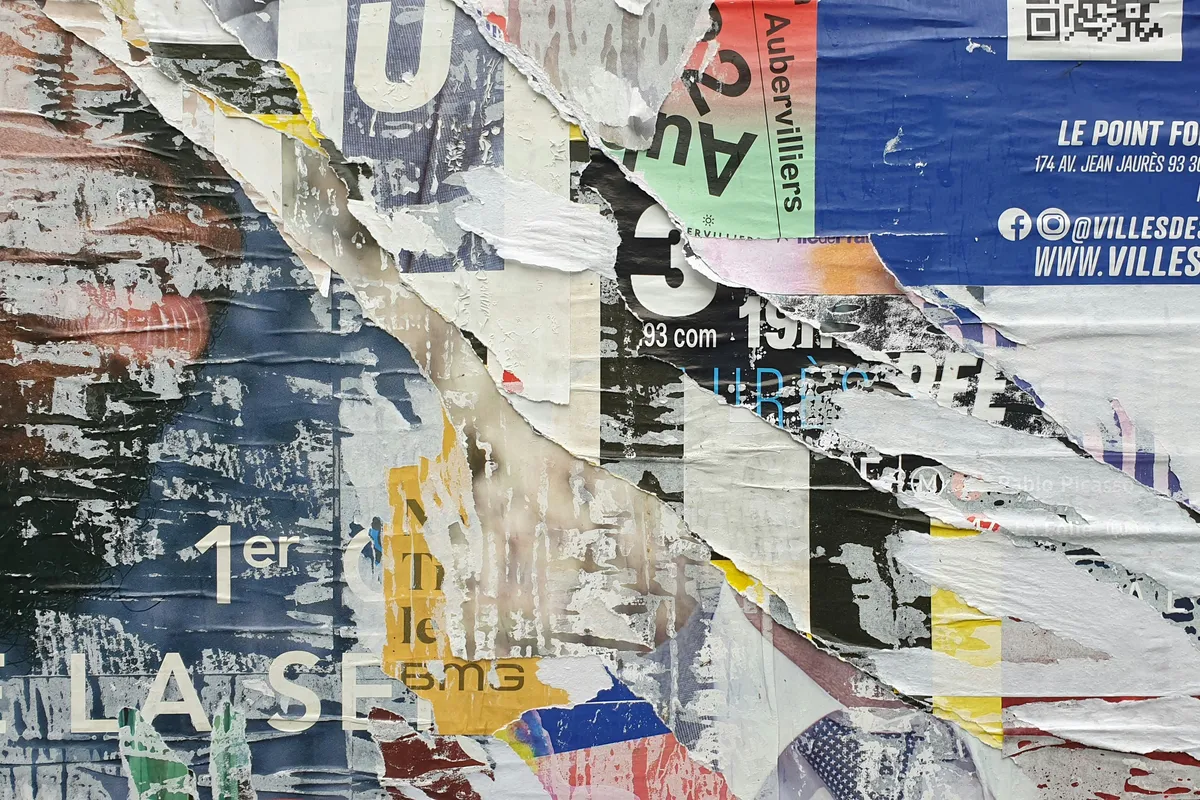
A mood board is a curated wall of other people's work. Photos, color chips, type specimens, textures, a competitor's screenshot, a film still. None of it is yours, and that's the point. You're not making anything yet, you're triangulating a feeling everyone can agree on before the expensive work starts.
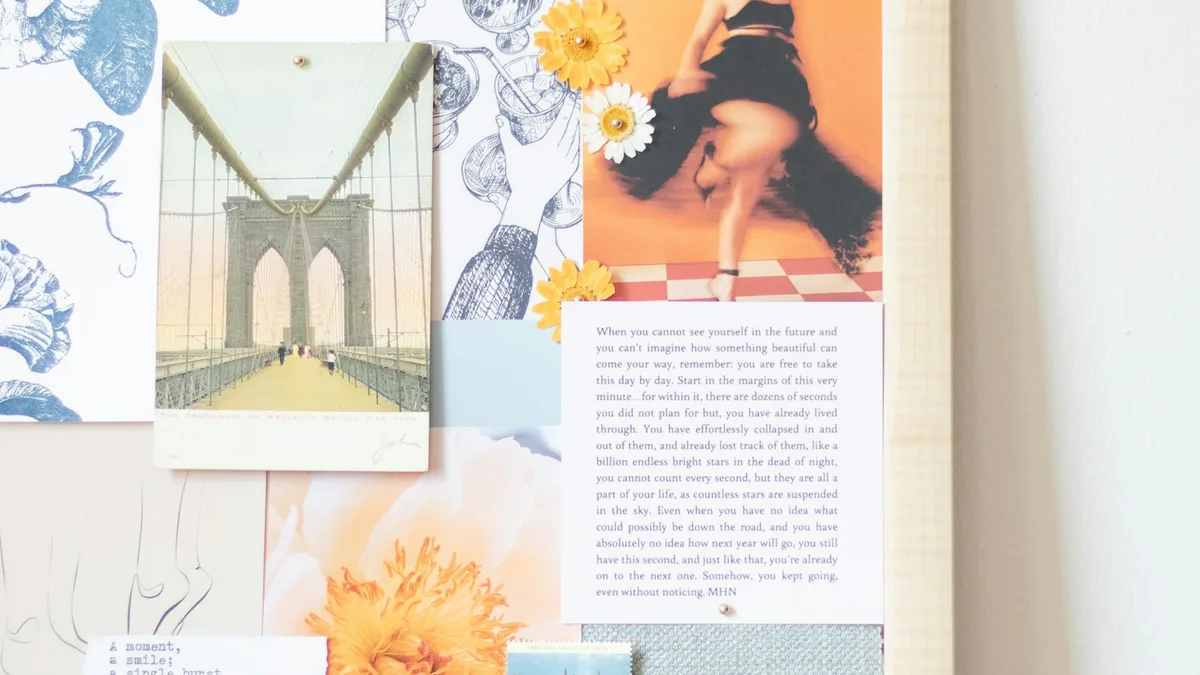
Its whole value is speed. You can build one in an hour from a folder of saved references, show it, and hear "yes, warmer" or "no, too corporate" while changing course still costs nothing. A mood board that takes three days has missed its own purpose.
The trap most people fall into is treating the mood board as a deliverable instead of a conversation. It isn't meant to be beautiful. It's meant to surface disagreement early, while disagreement is cheap. Clients fall in love with a mood board and then feel cheated when the real design looks different, which is exactly backwards. The board pointed a direction; it never promised to be the destination. Set that expectation out loud when you present one, and it does its job without setting a trap for the work that follows.
What Does a Styleframe Actually Do?
A styleframe is a single frame of your real project, designed to final quality. Real layout, real type, real color, real content, rendered so it looks like a screenshot of the finished product that doesn't exist yet. In motion work it's the frozen frame that pre-implies the whole animation. In UI work it's the hero screen that sets every rule the rest of the interface will follow.
Where the mood board says "head this way," the styleframe says "here's exactly what that looks like when we build it." It's a commitment, and it's the artifact a client actually signs off. If you want the full breakdown of how to make one, we cover it in the practical styleframe design guide.
A mood board points at a direction. A styleframe proves you can build it. One is inspiration; the other is a commitment.
How Do They Differ, Side by Side?
| Mood board | Styleframe | |
|---|---|---|
| Content | Other people's references | Your original design |
| Fidelity | Rough collage | Final quality |
| Question it answers | Which direction? | Exactly how will it look? |
| Time to make | An hour | Hours to a day |
| What it's for | Aligning on tone | Locking the look, sign-off |
Read that table and the relationship is clear: they're sequential, not competing. The mood board narrows the field cheaply. The styleframe commits to a spot in that field with something you built.
When Should You Use Each One?
Use a mood board when the direction is open, when you need to align people with different tastes, or when you want to fail cheap before investing design hours. Use a styleframe when the direction is agreed and you need to prove it, lock it, and get it approved.
The most common failure mode is skipping straight to the styleframe on a project where the direction was never actually settled. You spend a day building a gorgeous frame, present it, and the feedback isn't about execution at all, it's "actually, can we see something completely different?" That's a mood-board question arriving a day too late. The reverse failure is cheaper but still wasteful: presenting a mood board when everyone already agreed on the look weeks ago, so the meeting just burns an afternoon confirming what nobody doubted. Match the artifact to the open question, and neither trap catches you.
In a real pipeline they hand off to each other, and the styleframe then hands off again to production. That whole path, from a single approved frame through to shipped interface, is exactly what the styleframe to working UI pipeline maps out, and getting the specs cleanly to a developer is its own discipline covered in the designer to developer handoff guide.
What Does a Worked Example Look Like?
Numbers make this concrete, so take a hypothetical example: a 45-second product explainer for a logistics company, four weeks from kickoff to delivery. The brief says "clean and technical, but warm." That phrase means nothing, and everyone nods at it, which is precisely why the mood board comes first.
Build three boards, not one. Board A leans cold and diagrammatic: isometric warehouses, blues, thin strokes. Board B is warm and photographic: real drivers, amber light, chunky sans type. Board C sits between them: flat vector shapes with warm accents on a near-neutral ground. Present all three in a short call with no commentary beyond naming them, because the moment you explain which one you prefer, you've contaminated the answer.
Say the client picks C quickly, then argues for twenty minutes about whether the amber is too orange. That argument is the entire value of the meeting. Twenty minutes of taste disagreement at that stage costs nothing. The same twenty minutes arriving after a finished styleframe would cost a day of rework.
Then come two styleframes. Frame one shows the opening title over a warehouse scene. Frame two shows a mid-video data moment, a route map with live counters, because that's the hardest thing in the piece and it should be approved before animating anything. Both go out as 1920x1080 stills. One round of notes, mostly about the counter type size, and the look is locked.
The front-loaded work feels slow at the start of a four-week schedule. It pays back in animation rework that never happens.
Where Does the Distinction Get Blurry?
Two cases genuinely resist the clean split. The first is when a client sends you their own mood board, already assembled, usually from Pinterest. That board isn't a direction, it's a wish list, and it typically contains four incompatible aesthetics. Treat it as raw input, not as the agreed direction, and rebuild your own board from it.
The second is the "styleframe" that's really a template screenshot with the logo swapped. Some agencies bill for those. My unpopular opinion: if the frame doesn't contain your client's real content and real copy, it isn't a styleframe and it can't be signed off, no matter how finished it looks.
The rule: if you're arguing about taste, you need a mood board. If you're arguing about whether something will actually work, you need a styleframe. Bring the right one to the right fight and the meeting gets a lot shorter.