Picture a retro where an engineer says, flat out, "I don't use the design system because it's slower than just writing the CSS myself." Nobody argues with him. That's the moment adoption stops looking like a documentation problem.
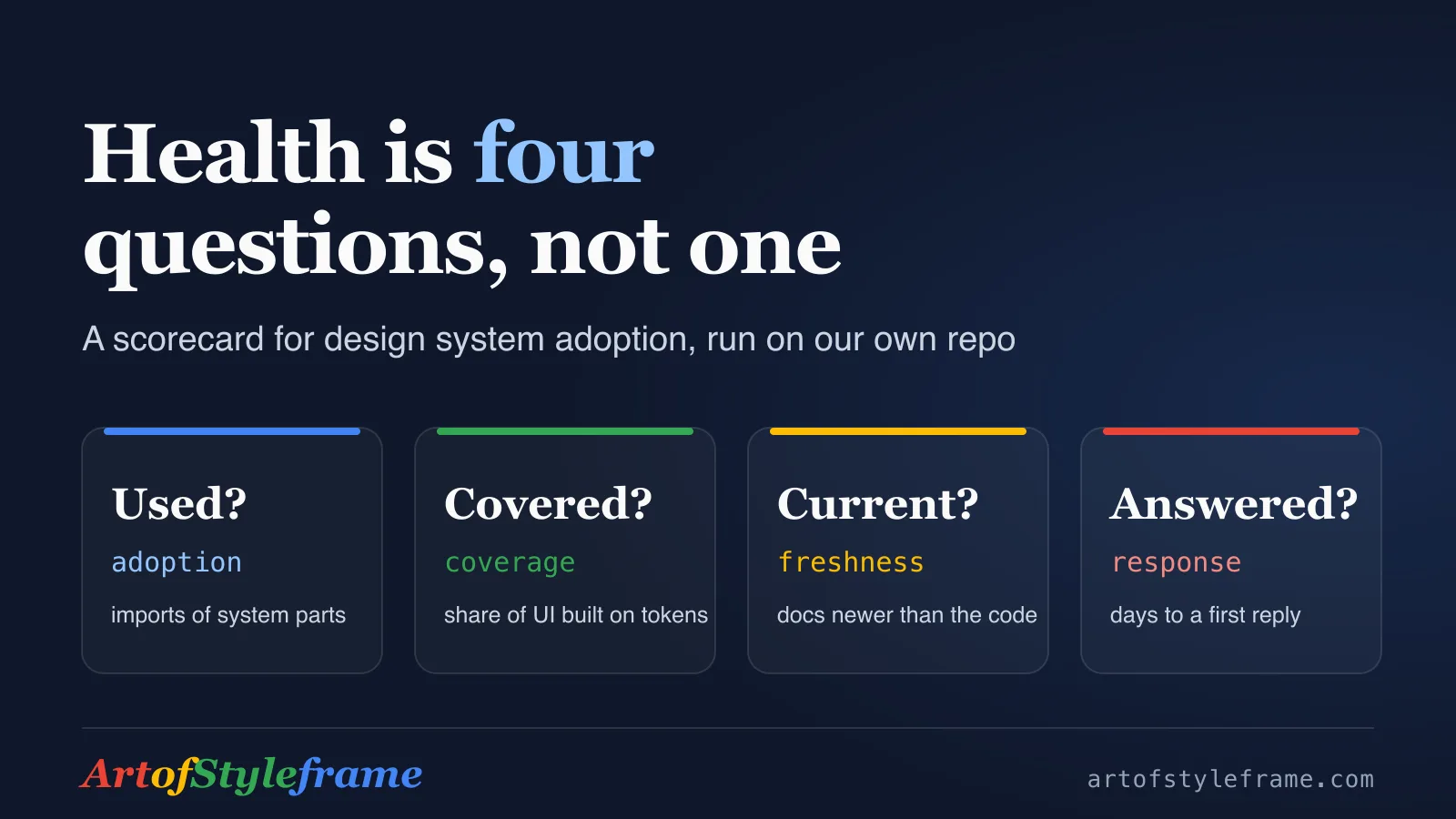
TL;DR: Design system adoption fails when it's treated as a tooling rollout instead of an org change. Driving adoption has been design system teams' top challenge for five straight years (zeroheight Design Systems Report 2026), and the fix is almost always about incentives and trust, not better Storybook docs.

Why Won't Engineers Just Use the Components You Built?
Because using them sometimes costs more time than not using them, and engineers optimize for the sprint in front of them, not your roadmap. If a card component is 90% right but the padding is off by 4px, the fast path is a CSS override. The slow path is filing an issue, waiting on a maintainer, and hoping it lands before the deadline. Guess which one wins on a Thursday afternoon with a demo Friday morning?
This isn't really a technical failure. It's an incentive failure. Buy-in satisfaction among design system teams actually dropped from 42% to 32% year over year according to the 2026 zeroheight report, and that's happening while more companies staff dedicated teams than ever. More investment, less trust. That gap is the whole story.
Is This Actually an Organizational Problem, Not a Technical One?
Yes, and treating it as a technical one is the single most common mistake I see. Teams pour months into API polish, Figma variable hygiene, and a beautiful docs site, then wonder why usage stays flat. Meanwhile the actual blocker is that engineering leadership never told anyone the system was a priority, so it competes with feature work and loses every time.
Headway's research on this puts it sharply: engineers hear "the design system makes you faster" and some of them quietly hear "you're replaceable" (Headway, 2025). That fear doesn't show up in a retro. It shows up as slow reviews, quiet forks, and components that get detached from the library the week after launch. You don't fix fear with a style guide.
A beautiful component API nobody trusts is worth less than an ugly one people actually reach for.
What Actually Moves the Adoption Needle?
Three things, in this order: fast response time on component requests, visible leadership backing, and a genuinely painless first contribution path. I've watched teams nail the first two and still stall because contributing a fix to the system required forking three repos and reading a 40-page contribution guide. Isn't it wild how often the blocker is that small?
Here's what tends to work:
- A same-day triage promise for component requests. Not same-day fix, same-day response. Silence is what kills trust.
- A public changelog that engineers actually read, because it proves the system moves.
- One senior engineer embedded on the design system team, not just designers. They speak the language and get believed in code review in a way a design-only team never will.
- A documented exception process so edge cases don't force a fork. If someone genuinely can't use the system yet, give them a ticket to file, not a reason to route around it forever.
How Does a Clean Handoff Change the Adoption Math?
It removes an entire category of friction before it starts. A lot of "the design system doesn't fit my case" complaints are actually handoff failures: the token names in Figma don't match the CSS custom properties, so an engineer assumes the system doesn't cover their scenario when it does. Getting the designer to developer handoff right, matching names character for character between Figma and code, quietly fixes adoption numbers that look like a system problem but are really a translation problem.
I've seen this specific fix move the needle more than any all-hands presentation about "why the design system matters." Nobody wants another meeting. Everyone wants their tools to just agree with each other.

What's the Honest Timeline for Adoption to Actually Stick?
A year, not a quarter, and I'll die on that hill. Month one is excitement. Months two through four are where the gaps surface and detachment creeps up, because that's when teams hit the first edge case nobody designed for. That dip isn't failure. Treating it as failure and pulling support at month three is what actually kills systems, right when they need reinforcement the most.
What predicts whether a system survives that dip? Whether reported gaps close within a couple of weeks, and whether an engineer can see that they closed. A gap fixed silently reads the same as a gap ignored, which is why versioning and a changelog do more for adoption than their tooling-chore reputation suggests. A system that visibly gets better in response to real usage earns trust fast. One that goes quiet for two months teaches everyone to stop reporting problems and start working around them, permanently.
| Timeframe | What typically happens |
|---|---|
| Month 1 | Excitement, initial usage looks strong |
| Months 2-4 | Component gaps get discovered, detachment starts creeping up |
| Year 1 | Adoption actually feels normal, if gaps closed within weeks of being reported |
Adoption isn't a launch event. It's a relationship you keep paying into, sprint after sprint, long after the kickoff deck is forgotten.